
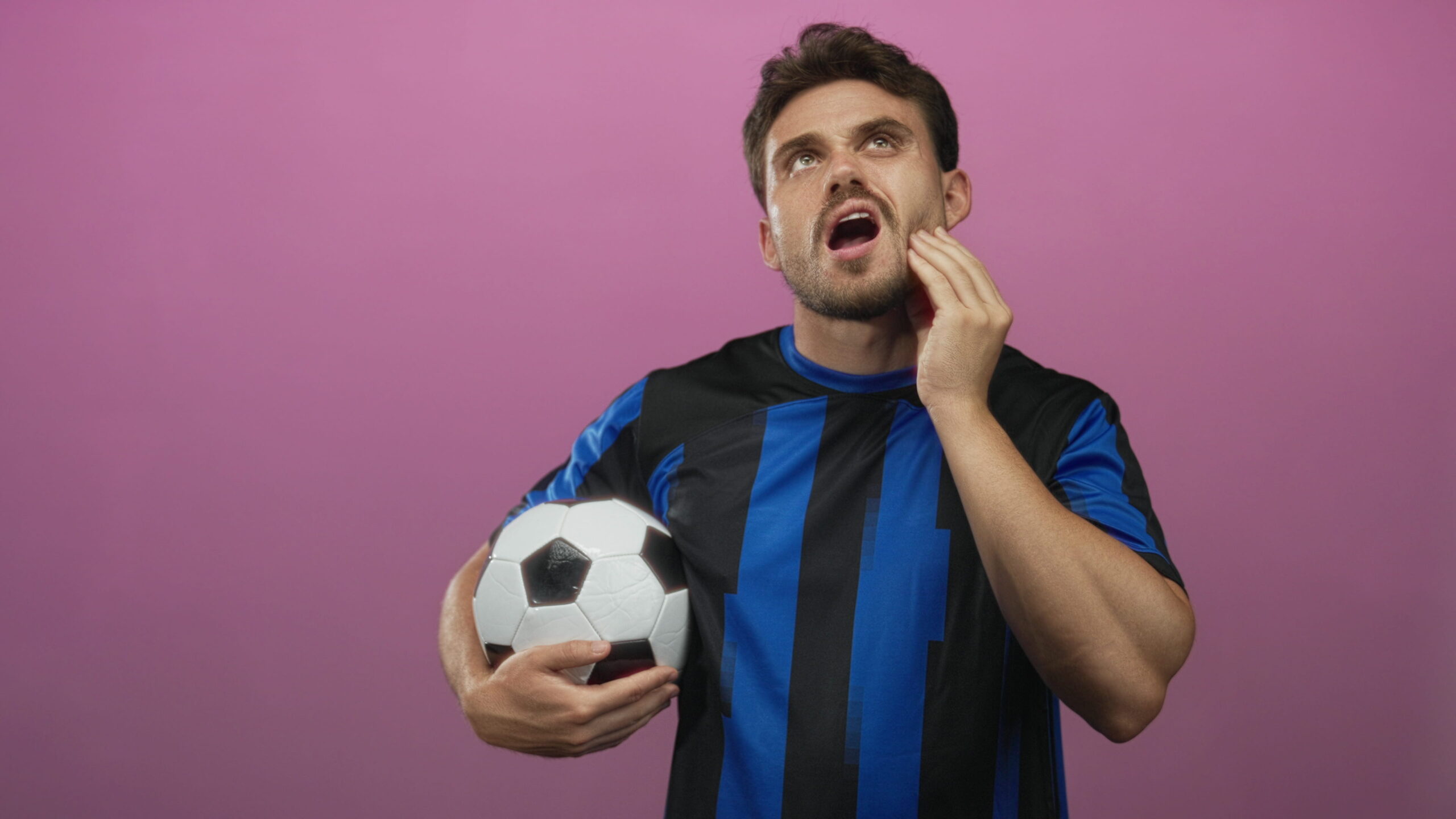
Dental Emergencies During Sports: Prevention and First Aid
October 30, 2026
Key takeaways
- A knocked-out tooth has the best survival odds when reimplanted or stored in milk within 30 to 60 minutes.
- Always handle a tooth by the crown, never the root, and rinse without scrubbing.
- A properly fitted mouthguard is the single most effective way to prevent sports dental injuries.
- Even non-contact sports carry real risk, so prevention should never be skipped.
- Keep a simple dental emergency kit on hand for every practice and game.
Picture the final seconds of a youth hockey game at a packed rink in the Mount Washington Valley. A puck ricochets, an elbow flies, and suddenly a young player is staring down at a tooth in a gloved palm. In that heart-pounding moment, what you do next matters more than almost anything else. This guide turns panic into a plan so that parents, coaches, and athletes across North Conway know exactly how to respond.
Quick Answer: What to Do When a Dental Emergency Happens During Sports
Stay calm, act fast, and protect the tooth. For a tooth that has been completely knocked out, pick it up by the crown, rinse it gently, and either slip it back into the socket or drop it into a cup of milk. Then head straight to a dentist. Speed is everything here.
The first 30 minutes matter most
The clock starts the instant a tooth leaves its socket. A knocked-out tooth has the strongest chance of being saved when it is back in place or stored properly within 30 to 60 minutes. According to research on common dental injury management in athletes, the delicate cells on the root surface begin to die quickly once exposed to air, which is why every minute counts.
When to call a dentist immediately
Call right away if a tooth is knocked out, pushed out of position, loose, or if there is bleeding that will not slow after gentle pressure. A cracked tooth with sharp pain, a jaw that will not close normally, or swelling that keeps growing all deserve an urgent call. When in doubt, pick up the phone. Our North Conway team would rather guide you early than see a fixable problem turn into a lost tooth.
The Four Most Common Sports Dental Emergencies
Most sideline tooth troubles fall into four buckets: a knocked-out tooth, a chipped or fractured tooth, a loosened tooth, and injuries to the lips, gums, or jaw. Knowing which one you are facing helps you react with confidence instead of guesswork.
Knocked-out (avulsed) tooth
This is the true emergency of the group. The entire tooth, root and all, has popped free. It is dramatic and scary, but a knocked-out adult tooth can often be saved when handled correctly and quickly. Baby teeth, on the other hand, should never be reimplanted, so let a dentist decide.
Chipped or fractured tooth
A chip can be a minor cosmetic nick or a deep break that reaches the nerve. Save any broken pieces you can find and keep them moist. Even a small fracture deserves a look, because hidden cracks can spread over time.
Loosened or displaced tooth
Sometimes a blow loosens a tooth or shoves it out of line without fully removing it. Do not wiggle it or test how loose it is. Gently guide it back toward its normal position with light finger pressure if you can, then bite softly on a clean cloth to hold it steady until you reach care.
Soft tissue and jaw injuries
Cut lips, bitten tongues, and split gums bleed heavily and look worse than they often are. Apply gentle pressure with clean gauze. A jaw that clicks, locks, or cannot close evenly needs prompt attention, since a possible fracture should never wait.
First Aid Step-by-Step for a Knocked-Out Tooth
Follow four quick moves: handle by the crown, rinse gently, reimplant or store in milk, then get to a dentist fast. A review of first aid for sports-related dental trauma confirms that proper on-site handling dramatically improves the odds of keeping the tooth.
Handle the tooth by the crown only
Grab the white chewing part you normally see. Never touch the root, since the fragile living cells there are what allow the tooth to reattach.
Rinse gently without scrubbing
If the tooth is dirty, rinse it for a few seconds with milk or clean water. Do not scrub, scrape, or dry it, and never wrap it in a tissue. Those healthy cells need to stay moist.
Reimplant or store in milk
If you can, slide the tooth back into its socket and have the athlete bite softly on gauze to hold it. If that is not possible, place it in a cup of cold milk. Milk keeps the cells alive far better than water.
Get to a dentist within the hour
Head to our office or an emergency provider immediately. The sooner the tooth is professionally stabilized, the better the long-term outlook.
First Aid for Chipped, Cracked, and Loosened Teeth
For breaks and wobbles, your goals are simple: protect the tooth, stop the bleeding, and manage pain until you reach the office.
Managing a fractured tooth
Rinse the mouth with warm water to clear away debris, then save any fragments in milk or saliva. If a sharp edge is cutting the tongue or cheek, a piece of sugar-free gum or dental wax can cushion it temporarily. Avoid chewing on that side until you are seen.
Controlling bleeding and swelling
Apply firm, gentle pressure with clean gauze or a cloth for several minutes. For swelling, hold a cold pack to the outside of the cheek in short intervals. Keeping the head slightly elevated also helps calm both bleeding and puffiness.
Pain relief and the 3-3-3 rule
An easy way to remember basic toothache care is the 3-3-3 approach: rinse with warm salt water three times a day, take an approved pain reliever roughly every few hours as directed on the label, and apply a cold compress for about three minutes at a time. If pain climbs past that comfort zone, it is a signal to be seen quickly. Always follow dosage guidance from product labels or your provider.
Which Sports Carry the Highest Risk of Dental Injury?
Contact and collision sports top the list, but no field or court is truly risk-free. A study of sports-related dental emergency awareness among coaches found that flying elbows, balls, and hard falls are frequent culprits across many activities.
| Risk Level | Common Sports |
|---|---|
| Higher | Hockey, basketball, football, wrestling, boxing, lacrosse |
| Moderate | Soccer, baseball, softball, skateboarding |
| Still worth guarding | Gymnastics, cycling, skiing, volleyball |
Contact and collision sports
Hockey and basketball are repeat offenders in our valley, where winter rinks and busy gyms keep young athletes active year-round. Direct impact with a puck, elbow, or the floor can knock a tooth loose in a split second.
Why non-contact sports still pose risks
Falls happen everywhere. A gymnast missing a landing or a cyclist hitting loose gravel on a mountain trail can suffer the same injuries as any linebacker. That is why prevention should never be reserved only for the roughest games.
Preventing Sports Dental Injuries
The best emergency is the one that never happens, and a mouthguard is your strongest shield. Pair it with the right headgear and regular dental visits, and you have a solid defense.
Choosing the right mouthguard
A good mouthguard cushions blows, keeps teeth from slamming together, and protects the lips and tongue. It should fit snugly, let you breathe and speak comfortably, and stay put without constant adjusting. If an athlete keeps taking it out, it is probably the wrong fit.
Custom vs. boil-and-bite vs. stock
Use these
- Custom-fitted guards made from a mold of the teeth for the best comfort and protection
- Boil-and-bite guards as a solid middle-ground option
- Guards that stay in place without clenching
Avoid these
- Bulky stock guards that are loose and hard to breathe through
- Any guard that falls out or feels painful
- Sharing a mouthguard between players
Helmets, faceguards, and routine checkups
Helmets and faceguards add a second layer for high-impact sports, especially hockey and football. Routine dental visits round out your defense by catching weak spots early.
What Parents and Coaches in North Conway Should Keep in Their Kit
A few simple supplies turn any coach or parent into a capable first responder. Pack them once and keep them in the gear bag all season.
A simple dental emergency kit
- A small sealed container with a lid for a lost tooth
- Single-serve milk boxes for storage and transport
- Clean gauze and a few cotton rolls
- Dental wax to cover sharp edges
- Disposable gloves and a cold pack
- A card with our phone number and address
Educating your team on first aid
Knowledge spreads faster than any injury. Spend five minutes before the season teaching players and parents the handle-by-the-crown rule and the milk trick. When everyone on the bench knows the plan, panic has no room to take over.
When to Seek Emergency Dental Care
Reach out immediately for any knocked-out, displaced, or seriously cracked tooth, as well as uncontrolled bleeding or a jaw that will not close. These situations do not improve on their own.
Signs you cannot wait
Do not delay if you notice a tooth that is out of place, bleeding that continues after ten minutes of pressure, severe or spreading pain, a swelling that grows, or any trouble opening and closing the mouth. Each of these points to a problem that needs prompt hands-on care.
How our North Conway team helps
Our White Mountain Dental family moves quickly for injured athletes, stabilizing loose teeth, repairing fractures, and guiding you through next steps with a calm, reassuring approach. Call us at (603) 356-6505 the moment an injury happens, and we will help you act fast when it matters most.
Ready to take the next step?
Schedule a consultation with White Mountain Dental in North Conway.
Call (603) 356-6505Meet Dr. Harry Gulati
Dr. Harry Gulati, BDS, DMD, CAGS, brings extensive clinical, academic, and research experience to Androscoggin Valley Dental. He earned his Bachelor of Dental Surgery from Dr. D.Y. Patil Dental School, his Certificate of Advanced Graduate Studies in Restorative and Esthetic Dentistry from Boston University, and his Doctor of Dental Medicine from Tufts University School of Dental Medicine. He also completed advanced training in implant dentistry through the International Academy of Dental Implantology.
Known for his calm and patient-centered approach, Dr. Gulati provides preventive, restorative, cosmetic, and implant care with a strong focus on long-term function and natural-looking results. He takes the time to explain treatment options clearly, helping patients feel informed, comfortable, and confident throughout their care.
Beyond private practice, Dr. Gulati has served as an Associate Clinical Professor at Tufts University School of Dental Medicine, where his responsibilities have included clinical instruction, diagnosis, treatment planning, and mentoring dental students. He has lectured nationally and internationally on restorative dentistry, dental education, and the treatment of endodontically treated teeth. His professional contributions also include published research, editorial and journal-review roles, dental product evaluation, and participation in organizations such as the American Dental Association, Academy of General Dentistry, and American Dental Education Association.
Dr. Gulati’s commitment to dentistry extends into the community through volunteer dental screenings, outreach programs, fundraising, and services supporting children and underserved populations. His dedication to clinical care, education, and service has earned several honors, including Incisal Edge’s Top 40 Under 40 recognition, the Doctors’ Choice Award, and fellowship in the International College of Dentists.
Learn more about Dr. Gulati’s professional background and accomplishments on his LinkedIn profile.
Frequently asked questions
Q: What is the 3-3-3 rule for a toothache?
The 3-3-3 rule is a simple way to ease a toothache: rinse with warm salt water three times a day, take an approved pain reliever about every few hours as directed on the label, and apply a cold compress for roughly three minutes at a time. If pain keeps climbing, see a dentist promptly.
Q: What are the four common dental emergencies?
The four most common sports dental emergencies are a knocked-out tooth, a chipped or fractured tooth, a loosened or displaced tooth, and soft tissue or jaw injuries such as cut lips and bitten tongues. Each one benefits from quick, correct first aid.
Q: Which sport has a higher rate of dental injuries?
Contact and collision sports carry the highest rates, with hockey, basketball, football, wrestling, and boxing leading the way. However, falls in non-contact activities like gymnastics, cycling, and skiing can cause the same injuries, so a mouthguard is wise for nearly every sport.
Q: What is the 3-3-3 rule for teeth?
The 3-3-3 rule for teeth refers to the same simple toothache comfort routine: salt water rinses three times daily, measured pain relief at regular intervals as labeled, and short cold compress sessions of about three minutes. It is temporary relief, not a replacement for treatment.
Q: Can you put a knocked-out tooth back in yourself?
Yes, for an adult tooth, you can often gently place it back into its socket after holding it by the crown and rinsing it. Bite softly on gauze to hold it in place, then see a dentist within the hour. Never attempt to reimplant a baby tooth.
Q: How long can a knocked-out tooth survive outside the mouth?
A knocked-out tooth has the best chance of being saved when it is reimplanted or stored in milk within 30 to 60 minutes. The longer it stays dry and out of the mouth, the lower the odds of success, so speed truly matters.
For directions, use this helpful Google Maps link or get step-by-step navigation via Get Directions.
Remember: Act within the first 30 to 60 minutes, handle a knocked-out tooth only by the crown, store it in milk, and call a dentist right away.
Disclaimer: This article is for general information only and is not a substitute for professional dental or medical care. Always consult a qualified provider for any injury or emergency.
